Thursday, 5 June 2014
Moved to woodfiction.tumblr.com
This blog is more or less defunct, please follow me on Tumblr to keep up with new books and me procrastinating when I should be writing new books.

Thursday, 27 February 2014
Harold and Keda
I’m a firm believer that subtext and symbolism
are rarely pre-planned and tend to reveal themselves over time, even to
the writer. There are elements of these in my stories that others have
pointed out to me, and I have to conclude must have gotten there
subconsciously. Plot elements arise that I never planned out, but which
I’ll happily take credit for.
With that in mind, I am certain that the relationship between Shinichiro Keda and Harold Saldana was sexual.
They were not in love with each other, but they were lovers. I think it began sometime while Keda was doing his Medium training in New York. It would have continued until the event which split them and Keda decided to live full-time in the United States.
Further, I think that Fuhara— Harold’s other protege, who appears briefly in Dead Roots and I never fleshed out the way I had originally intended— entered the picture before Keda left and that they were a threesome for at least a short time.
I think that Keda’s reunion with the both of them in Tokyo, when he delivered Aki, was a tryst behind the fusuba doors, while Tom and Artie drank whiskey, oblivious.
I think that when Keda returned to Harold’s apartment to take Aki away, he used his sexual power over Harold to get his former teacher’s guard down and take the creature for himself.
These are events which I wish in retrospect that I’d explored in the text, but for now they can be considered the real story as of this post.
With that in mind, I am certain that the relationship between Shinichiro Keda and Harold Saldana was sexual.
They were not in love with each other, but they were lovers. I think it began sometime while Keda was doing his Medium training in New York. It would have continued until the event which split them and Keda decided to live full-time in the United States.
Further, I think that Fuhara— Harold’s other protege, who appears briefly in Dead Roots and I never fleshed out the way I had originally intended— entered the picture before Keda left and that they were a threesome for at least a short time.
I think that Keda’s reunion with the both of them in Tokyo, when he delivered Aki, was a tryst behind the fusuba doors, while Tom and Artie drank whiskey, oblivious.
I think that when Keda returned to Harold’s apartment to take Aki away, he used his sexual power over Harold to get his former teacher’s guard down and take the creature for himself.
These are events which I wish in retrospect that I’d explored in the text, but for now they can be considered the real story as of this post.
Monday, 24 February 2014
A few facts about the upcoming Analyst book

- This book will be written so that new readers can jump straight in.
- Several characters from the previous books will appear.
- Like in Dead Roots, the antagonist of Land of Unbeliefwill be tied to Tom’s past.
- Something drastic will happen to Artie.
- Volumes 2 and 3 did not give enough attention to the use of chems and medications. This one will.
- I will continue my commitment to writing new LGBT and PoC characters. One of the existing characters will come out.
- For at least me personally, this will be the most emotionally painful volume to date.
That’s about it for now. More info in the coming months!
Saturday, 19 October 2013
Four books I read this year that surprised me
Luther: The Calling (Neil Cross)
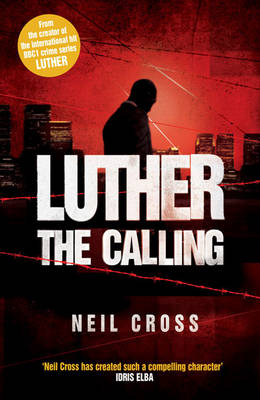
Somebody on my tumblr feed offhandedly mentioned the BBC crime drama Luther starring Idris Elba. I love Idris Elba, so I went to investigate. I was pulled in by the series' classy, gritty opening sequence featuring Massive Attack:
Research into the series led me to find that the show's creator, Neil Cross, was an award-winning UK crime novelist; and that after the first two seasons of the show aired, he wrote a prequel novel entitled Luther: The Calling, which then won him another award. An award-winning media tie-in novel? I was intrigued, and skeptical. I went to Amazon and picked it up immediately.
A few hours later I was putting it down to take a breath and process some of the truly gruesome imagery, something I don't think a book has ever done to me before. The TV show, while enjoyable, unfortunately didn't live up to the expectations the book left me with, probably a symptom of Neil Cross making the jump from prose to television; nonetheless, highly recommended.

Sideways (Rex Pickett)
I've seen the movie adaptation of Sideways more times than I can count, so I was excited to finally dig into the original book. I was delighted with the narrative and also taken aback by how the two protagonists somehow manage to be even worse individuals in the book than in the film; but most importantly I feel like Sideways is exemplary of a film adaptation which deviates significantly from the source material but still remains tasteful and faithful to the spirit if not the letter of the text. Entire characters and sections are cut in the film, the opening and ending are significantly different, and several key scenes play out very differently. In some instances I preferred the film version and in some the book.In every case where a change was made, I could recognize clearly how a certain section would be too bloated in the transition to a screenplay. I enjoyed the book's version of events equally as much as the film's and I never felt annoyed at an omission, or that the change undermined the integrity or intention of the narrative. Truly it was a case of trimming fat, streamlining the book to make the jump to a visual medium. I find it difficult to articulate much further so I'll leave with a glowing recommendation for both the book and the film (the film in particular one of my favorites ever), as well as urging you to experience both if you're pursuing a career in writing or film.
The Wind-Up Bird Chronicle (Haruki Murakami)

This stands out as the only entry on this list where the surprise came in the form of stark disappointment. I was introduced to Haruki Murakami early this year, and I found in him a new favorite, devouring five of his novels over the course of a few months. My latest purchase from his back catalogue was The Wind-Up Bird Chronicle, widely considered to be his best and most sprawling work.
If I would call Kafka on the Shore his least accessible novel of the ones that I've read, Wind-Up Bird is the only one I'd honestly just call... boring. I forced myself through to the finish, never finding that resolution, or at least satisfaction, I'd come to expect from Murakami. Long-winded detours and an absence of much in the way of plot made this an honest-to-goodness slog. I wonder why?
I understand there is a stage adaptation of this book, which I hope I'll one day get to watch, or if nothing else gives me hope for an eventual film; perhaps if the story was presented to me visually I'd find more to connect with and really discover what it was trying to say. Failing that though I really did not enjoy this book at all save for a few scattered parts-- a huge disappointment considering how much I've fallen in love with Murakami's prose. That's my opinion, at least; I'm keen to hear from anyone who has a more positive interpretation of it.
The Night Circus (Erin Morgenstern)
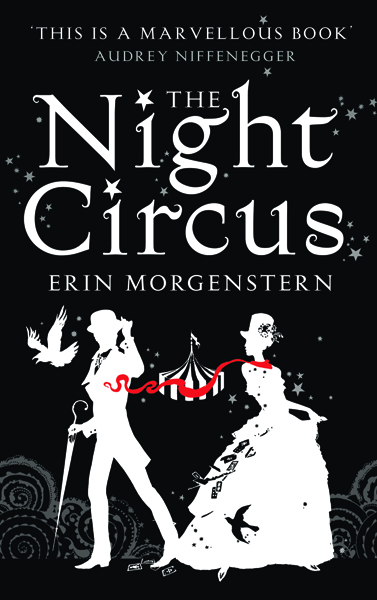
Full disclosure-- I was prepared to hate this book. I'm a wee bit of a snob when it comes to reading so I am often loathe to dive into the fantasy section or read anything that's popular with the YA crowd; this came highly recommended from a friend with a much stronger literary background than me, however, so I begrudgingly put aside my pretensions and gave it a look.
To my shock and delight, something that reminded me a bit too strongly of the "indie steampunk" set at first glance turned out to be quite a delicious and well-paced read. Phantasmagoric imagery, prose that was intricate without being too purple and some overt references to Shakespeare to satisfy my snobby tastes; there was not too much or too little of The Night Circus and I'm quite excited to read Morgenstern's next novel whenever she gets around to releasing it. In spite of myself.
That said, I will never not think 'Erin Morgenstern' is a terrible pseudonym. My apologies.
Tuesday, 10 September 2013
King of Men now available on Kindle

“Genuinely horrifying… I had to put it aside twice due to the vivid picture Wood paints with his words.”
“If you enjoy horror, paranormal themes, or even just want an action novel with masterfully crafted worldbuilding, you owe it to yourself to check this out.”
“Urgent and bleak… the story grabs you by the throat and demands your attention.”
Hours after the conclusion of BLOOD MOTHER, Tom Bell and his companions flee to Japan to exorcise the demonic entity, Aki, once and for all. Power-mad Harold Saldana pursues them with the full weight of the D.P.S.D. and his own vast underground network at his command. Tom must cross enemy territory to reach the remote village of Kurozu before Harold does, and every minute that passes, Keda is losing his grip on the godlike creature inside of him.
Outlawed by his own department, Agent Bell will be forced to forge strange alliances with otherworldly beings, and decide how much of himself he’s willing to compromise to see this perilous mission through to the end; nobody is coming back the same, if they come back at all.
Click here to get King of Men for Amazon Kindle.
Sunday, 18 August 2013
I would make Tom Bell black if I wrote Dead Roots tomorrow.
My skin is pretty light. My mother is of European descent but my
father was from Birmingham; my entire family on his side is straight up
pre-Civil Rights Alabama black. I came out light-skinned and as
a result for most of my life I thought of myself as white, though I was
still raised to be very conscious of my black heritage.
Over the past year— after the release of Dead Roots but before Blood Mother— I have been reconnecting with my family roots and identifying as a biracial African-American. I tick African-American and white on forms where I’m asked for my ethnicity. I consider myself an author of color. If this is an issue for you, do us both a favor and stop reading— it’s not up for debate.
I had a pretty privileged upbringing, but my father did not, and the emotional impact of growing up the way he did most definitely impacted the environment in my home as a youngster. I did not grow up in a “white” household. However, for much of my life I sort of viewed the world through a white filter, one I’ve had to deprogram myself from since I started dedicating myself to my writing. I viewed white as the default for characters in media. Though this is no longer the case, Thomas Bell and many of the characters in Dead Roots came out of the last days of that mindset, so as a result two of the three main protagonists in my series are white guys.
This is a situation I’m not entirely happy with, as I had the opportunity to go against the grain with a black protagonist and I didn’t take it. By the time I was writing Blood Mother, I was conscious of this and the story started to take shape around the fact that Tom and Artie are straight white guys. Much of the plot in Blood Mother centers around a colony of creole farmers descended from antebellum slaves. Rodham Baker, a black co-worker of Tom’s, is presented as a perceived threat to Tom’s masculinity; Tom projects his insecurities onto Rodham, in a way wants to be him. This is cemented in a scene near the end when Rod becomes a threat to Tom’s romantic life, the subtext intended to shine a light on Tom’s ingrained, unexamined fear of the “black male”.
Though not as emphasized, Artie’s background as a hillbilly from West Virginia is also thrown into focus on a few occasions, with his attitudes towards both race and sexuality. He is not what I would consider hatefully homophobic or racist, but certainly has some hangups that he could stand to have examined; he is portrayed as fearful of gay people and people of color in the sense that he feels like a guilty party. He is fearful of being perceived to have prejudice towards the minority characters in the story.
I guess what I’m getting at is that I’m attempting to make up for propagating the cliche of the white protagonist duo by examining it, and laying my own previous disregard on the table. I’m hoping that by subverting the trope and highlighting the fact that Tom and Artie are a couple of milquetoast guys in a rapidly advancing society, by contrasting Tom’s progressive attitudes against Artie’s ingrained fears, I can retroactively justify making the characters Caucasian.
In this way I expect I would, hypothetically, want Artie to be played by a white actor or portrayed as Caucasian in a comic adaptation; Tom, however, is not so enmeshed in his race as a part of his character that he couldn’t be played by anybody, at least to me. If I were starting the series again tomorrow he’d be definitively black, though as it stands I’m happy for him to be thought of by the reader as black, Asian, latino, or whatever might come to mind—though American-born is non-negotiable, by virtue of his canon background and how it informs his relationship with Shinichiro Keda. Similarly, Margaret is described as white and red-haired, but her personality and background are a blank slate as far as ethnicity is concerned.
I suppose what I’m trying to say is that Dead Roots reflects a white-as-default attitude that I found myself surrounded by, having light skin and living in suburban New Zealand for a large chunk of my life; but from the second book and going forward I will be working to remedy that. Thanks for your patience, and sorry for dropping the ball.
Over the past year— after the release of Dead Roots but before Blood Mother— I have been reconnecting with my family roots and identifying as a biracial African-American. I tick African-American and white on forms where I’m asked for my ethnicity. I consider myself an author of color. If this is an issue for you, do us both a favor and stop reading— it’s not up for debate.
I had a pretty privileged upbringing, but my father did not, and the emotional impact of growing up the way he did most definitely impacted the environment in my home as a youngster. I did not grow up in a “white” household. However, for much of my life I sort of viewed the world through a white filter, one I’ve had to deprogram myself from since I started dedicating myself to my writing. I viewed white as the default for characters in media. Though this is no longer the case, Thomas Bell and many of the characters in Dead Roots came out of the last days of that mindset, so as a result two of the three main protagonists in my series are white guys.
This is a situation I’m not entirely happy with, as I had the opportunity to go against the grain with a black protagonist and I didn’t take it. By the time I was writing Blood Mother, I was conscious of this and the story started to take shape around the fact that Tom and Artie are straight white guys. Much of the plot in Blood Mother centers around a colony of creole farmers descended from antebellum slaves. Rodham Baker, a black co-worker of Tom’s, is presented as a perceived threat to Tom’s masculinity; Tom projects his insecurities onto Rodham, in a way wants to be him. This is cemented in a scene near the end when Rod becomes a threat to Tom’s romantic life, the subtext intended to shine a light on Tom’s ingrained, unexamined fear of the “black male”.
Though not as emphasized, Artie’s background as a hillbilly from West Virginia is also thrown into focus on a few occasions, with his attitudes towards both race and sexuality. He is not what I would consider hatefully homophobic or racist, but certainly has some hangups that he could stand to have examined; he is portrayed as fearful of gay people and people of color in the sense that he feels like a guilty party. He is fearful of being perceived to have prejudice towards the minority characters in the story.
I guess what I’m getting at is that I’m attempting to make up for propagating the cliche of the white protagonist duo by examining it, and laying my own previous disregard on the table. I’m hoping that by subverting the trope and highlighting the fact that Tom and Artie are a couple of milquetoast guys in a rapidly advancing society, by contrasting Tom’s progressive attitudes against Artie’s ingrained fears, I can retroactively justify making the characters Caucasian.
In this way I expect I would, hypothetically, want Artie to be played by a white actor or portrayed as Caucasian in a comic adaptation; Tom, however, is not so enmeshed in his race as a part of his character that he couldn’t be played by anybody, at least to me. If I were starting the series again tomorrow he’d be definitively black, though as it stands I’m happy for him to be thought of by the reader as black, Asian, latino, or whatever might come to mind—though American-born is non-negotiable, by virtue of his canon background and how it informs his relationship with Shinichiro Keda. Similarly, Margaret is described as white and red-haired, but her personality and background are a blank slate as far as ethnicity is concerned.
I suppose what I’m trying to say is that Dead Roots reflects a white-as-default attitude that I found myself surrounded by, having light skin and living in suburban New Zealand for a large chunk of my life; but from the second book and going forward I will be working to remedy that. Thanks for your patience, and sorry for dropping the ball.
Friday, 16 August 2013
King of Men available in September

Praise for DEAD ROOTS and BLOOD MOTHER:
“Genuinely horrifying… I had to put it aside twice due to
the vivid picture Wood paints with his words.”
“If you enjoy horror, paranormal themes, or even just want
an action novel with masterfully crafted worldbuilding, you owe it to yourself
to check this out.”
“Urgent and bleak… the story grabs you by the throat and
demands your attention.”
Hours after the conclusion of BLOOD MOTHER, Tom Bell and his
companions flee to Japan to exorcise the demonic entity, Aki, once and for all.
Power-mad Harold Saldana pursues them with the full weight of the D.P.S.D. and
his own vast underground network at his command. Tom must cross enemy territory
to reach the remote village of Kurozu before Harold does, and every minute that
passes, Keda is losing his grip on the godlike creature inside of him.
Outlawed by his own department, Agent Bell will be forced to
forge strange alliances with otherworldly beings, and decide how much of
himself he’s willing to compromise to see this perilous mission through to the
end; nobody is coming back the same, if they come back at all.
King of Men will launch this September for Kindle and Nook devices as well as paperback.
Thursday, 11 July 2013
In Their Shoes: Writing The Analyst's transgender character
It occurred to me sometime while editing Dead Roots that one of my characters was
transgender. When I put it that way, I may be glorifying the decision: the
insinuation being that the character revealed the fact to me through a dream or
some other afflatus of divine writ, and I had no agency in it. That would be
dishonest.
The decision was mine entirely and a conscious one. However,
once the idea took form I found it impossible to consider the character in
their original context, impossible to back out and play it safe; in fact
certain facts about the character’s personality and history made more sense to
me once the change had been made, like details in a bas-relief uncovered by dusting
brush. In this way the decision was both a calculated move and an unconscious
part of the primordial muck of storytelling.
The change came on the heels of similar revelations in my
own life, when two of my closest and oldest friends came out to me as trans (one
female-to-male, the other male-to-female) within a six month period. I resolved
that I would provide the most positive and respectful portrayal I could
possibly drum up, which meant a lot of research. It would be impossible to write
this without picking my friends’ brains beforehand. They were both thrilled to
hear about the character, but I had to give them ample warning.
I warned them that as a horror writer, and keeping in the
vein of my Analyst series, the
portrayal of this character would go to some extremely dark and raw places. I
wanted to take the horror of gender dysphoria and communicate it to a
mainstream audience. I wanted something brutal and disgusting and overall, real for my potential trans readers. I
saw it as an untapped well of material that deserved a thorough examination. To
do this I would have to ask them some very probing and strangely specific
questions, things they understandably might not want to share with anybody. If
I couldn’t get the answers to those questions, I would not write it—they didn’t
deserve guessing.
To my relief and delight, they were on board with the
process 100% of the way.
What came as a surprise—or maybe not, in retrospect—was the
way that the non-horror elements, the regular conversations and handling of the
eventual reveal, morphed as my own understanding evolved. While the nightmare
sequences remained as raw as they needed to, I became aware of how ‘othering’ I
was being in my default thinking towards the human side of the character. A beta reader came back from the first draft
of King of Men pointing out that while
the emotionally-charged discussions between the character and their estranged
parents rang authentic, their interactions with the main cast put too much emphasis
on the recent reveal. The character was not reduced to a plot device but a
palpable change occurred, not between the characters but between the trans
character and the reader. Details were laid out in a clinical fashion for the
reader’s benefit. Looking back over my draft I realized they were absolutely
correct.
An article called TheTrouble With Depicting Trans People by Zinnia Jones (who has graciously
acted as the third consultant in the process) articulated some of the finer
points of the problem I was facing. After reading it, I found myself staring at
the ceiling in thought for a long while, considering some of the places in King of Men where I had betrayed my
friends’ trust.
It’s always been my attitude that I expect my reader to be
intelligent, willing to draw their own conclusions on ambiguities and do their
own research. If an explicit detail can be obscured without interrupting the
flow of the story, then I remove it. There are hints towards the eventual
reveal laced throughout the previous two books, and as it turns out any
questions that might be asked by the characters, or the reader, have been
answered.
I continued to cut out and alter certain scenes. I scrapped
an entire planned horror sequence in favor of a single exchange of dialogue. I
worried that this would come off as laziness, an absence of research or effort,
but as I come closer to finishing the book I am learning to accept that I’m
simply not equipped to cross certain
borders, and I probably never will be.
The journey of the third Analyst
novel is almost over. Reflecting on the process, the challenge of writing trans
horror from a cisgendered perspective didn’t come from expressing the fear in a
way that readers would identify with, but in maintaining the character’s
humanity afterwards.
My aim from the beginning was to give a gift to two of my
oldest friends: a character written for them, my way of involving myself in
their lives and their struggles. This character is a monument to my gratitude
and respect for them, for their friendship and their patience with the world
and with me. If I’ve failed at that, then the learning and progress I’ve made
may well have been meaningless. Rather than idly hope for the best outcome, I
will make sure the final version of King
of Men is a product I, and they, can be proud of; in September the readers
can decide for themselves.
Wednesday, 29 May 2013
King of Men sample chapter
In his dream he ascended, soaring on
wings each as long as a man is tall. He was an eagle, a roc; he was
Garuda. His feathers were golden-white,
and real, unlike those of Icarus which melted in the heat of the heavens. His
would not melt no matter how high he flew. Instead, the sun came crashing down,
overwhelming the sky, destroying him, and razing the earth; until nothing remained.
“’Ironic’ is like, one of the best
songs ever,” said Artie.
Tom opened his eyes and squinted
against streaks and fades of fluorescent light. Artie had taken out one of his
earbuds and set it on the metal armrest. The roaring air outside the plane made
conversation a chore.
“You already know what I’m going to
say about this,” said Tom.
Artie frowned and took off his
glasses to thumb away a smudge. “Yeah, you hate Alanis Morissette because you
are a bad person.”
“No, I tell you this every time,”
said Tom. “I’m not saying it’s a bad song. I just don’t think it’s well-written.”
“Somebody should wash your mouth out
with soap.”
“Nothing in the song—“
“Blah blah blah, ‘nothing in the song is ironic!’” Artie
shoved his glasses back on and jabbed an indignant finger forth. “Save it. Save it. That’s the point. It’s ironic because the song is called ‘Ironic’ and
there’s nothing in it that’s actually
ironic.”
“It’s a malapropism.”
“A what?”
“You’re an idiot.”
“Fuck you, it’s cleverer than
anything that guy you’re so into has written. What’s he called? Donald Fag-en?”
“You are not comparing Alanis
Morissette to—“ Tom stammered.
“She is a poet laureate.”
“Poet—“
Tom pinched his forehead and broke into hooting laughter. “Hoooo, boy.” He unbuckled his seatbelt. “Gonna take a leak,” he
said as he rose.
“Fuck, write me a poem about it, why
don’t you. Concerning Tom’s Piss.”
Tom made his way down the aisle. In
his sleepy haze, he took care not to bump his elbows into other passengers or
step on an errant foot. On the way to the bathroom he passed Keda. The Medium’s
eyes were closed and hands folded in his lap; was he sleeping, or meditating?
Either way, Tom decided not to disturb him.
Fortunately there was a vacant
bathroom. Tom clicked the door behind him and took a lungful of recycled air
into his diaphragm. He burped and patted his chest and winced through some acid
reflux. He still hated air travel, but it was more tolerable now than during
his childhood, when even the thought of a cream-and-chrome closet like this one
had been enough to make him nauseous.
He hadn’t really needed to urinate;
he just wanted to take a pill without Artie seeing. He broke off a quarter of
Xanax—just a small one—and popped it
into his mouth, then bent over the sink and gulped up a mouthful of water to
swallow it with.
It would be just after noon now back
in Los Angeles. Tippler had pulled some strings and gotten them into the air on
short notice—as civilians. “Drive like the wind, and may whatever god be with
you,” Tippler had said. Tom’s hip, where he always kept his holster, felt
painfully vacant; the firearm was stored somewhere beneath him in the plane’s
cargo hold. His hair was stiff from sweat, his chin and neck ragged with brown stubble.
Tippler’s blessing felt like a vague formality. Tom drew a tissue to blow his
nose. He tossed the snotty rag into the toilet and flushed. The toilet hissed
and roared as if ejecting its contents into deep space.
Another splash of water and he felt
ready to go back to his seat. The lock clacked and the lights dimmed. He
stepped back into the cabin, yawning and stretching his arms.
The engines droned on, punctuated by
rattles and thuds of the fuselage, but the susurrus of everyday passenger
sounds had vanished. There were no coughs or conversations or babies or the
wheeling of food carts. As Tom wheeled the corner into the cabin, he realized
he was alone.
“Oh, fuck. Not here. Not now.”
His mind split into determined
analysis and punishing anxiety. During a shift, the same tricks that would stop
a panic attack in reality wouldn’t work. The world wasn’t real; he truly could die here at any moment. His hanging
heart thudded against his ribs and he tried to take slow breaths. He clutched
his heart and doubled over.
“God…”
Down the aisle another lavatory door
opened and a massively obese man squeezed his way out; his suit was pure white
and didn’t fit, the top button almost strangling him. The fat man dabbed a
handkerchief against his forehead as he caught sight of Tom. Down his bloated
chin he had a straight red line, a tattoo or scar, which jiggled from side to
side when he spoke. "Tom Bell?"
Tom gripped the head of the nearest
seat, and said nothing.
“My name is Depp,” said the fat man.
A bead of sweat dripped onto his shoulder. “Are you Agent Tom Bell?”
“What do you want?” Tom’s fingers
dug into cheap vinyl.
“Oh, good,” said Depp. “My preta is
hungry.”
“Your what?”
Depp ripped his shirt open and bared
his gargantuan gut. The red scar reached from his jaw to his groin. Depp threw
his head back and gripped the two nearest seats. The scar warped as if being pushed from the
inside by a hundred tiny fingers, then split at the belly button.
Depp heaved his arms and the whole
cabin shook and started to tilt like a carnival ride. Tom fell to his knees and
struggled to find purchase, hearing all manner of cups, bags and silverware
clatter to the floor. He wedged his legs on the two nearest seat cushions and a
half-empty can of soda rolled between them, spilling brown liquid in the aisle.
Depp’s stomach opened with a
creeping, sticky sound. Vicious red muscle showed through. His torso ruptured
from pelvis to throat and exploded outwards to reveal two rows of hideous
yellow teeth. The flaps of muscle around his stomach made misshapen parodies of
lips wrapped around blotchy gums. An enormous tongue rolled out and heaved
about in the air.
“What are you?” said Tom, leaning back against what had been the floor.
Depp’s tongue slurped over a row of blunt, horse-like teeth and drooled syrupy
saliva, which hissed and smoked when it touched the floor and seats. Then the
mouth talked, and Tom’s stomach turned.
“Hungry,”
it spat in a voice like broken glass. “Always hungry. Eating numbs despair.
Must eat.”
The cabin churned to a stop,
perfectly vertical. Depp twisted his arms and legs to dislocate the joints. He
threw his limbs out and gripped the surfaces of seat and wall like a great
obese spider. Tom looked up, shielding his face from falling books and
half-eaten dinner trays. He cast another look down at the gnashing maw, and
then pulled himself up to the next row of seats.
He had a head start on Depp, but it
wouldn’t help him for long. While he ascended the upturned aisle, the creature
followed at double his pace, swallowing with avarice anything that landed near
its mouth.
“Hungry.
Must feed despair. Must dull the pain.”
Tom grabbed a loose backpack from a
seat in front of him and dropped it. It landed on the creature’s teeth and the
canvas melted away before Depp devoured it. Tom swore and kept climbing. There
had to be something heavier.
“Must eat.”
Depp closed in on him a scarce
fifteen feet below. There was a bulky metal dinner cart lodged in one of the
alcoves a few more feet up. If he could just reach it… He doubled his efforts,
jumping from a cushion and grabbing the third row up with both hands. He was
adjacent to the cart. He leaned out across the gap, lodging himself on the wall
with one leg, and gripped the cart with both hands before pulling. Depp
slavered beneath him, a few rows shy of his feet.
“Must eat!”
The food trolley weighed a ton, but
after a lot of shifting and struggling, Tom heaved the cart out halfway out of
the alcove, and soon gravity would do the rest.
Depp’s tongue slapped Tom’s shin and
made him cry out in shock. The denim cuff frayed and dissolved and his skin
erupted in a vicious red rash. He threw his weight back, tipping the cart’s
middle over the corner. His back wrenched with the effort and he landed wrong.
The cart’s contents clattered as they fell and struck Depp in the teeth and
gums. Tom caught himself with his elbows and kicked his feet to urge the cart
into the aisle.
“Must--”
The food trolley’s metal corner
crunched against Tom’s wounded shin, throwing him off balance, and sending both
him and the cart careening downwards. The cart slammed into Depp, knocking the
beast loose from its perch. Agent, creature and trolley toppled down the
upturned cabin. Tom grabbed a seat for dear life; gravity nearly popped his
shoulder out of its socket and he winced through the pain. Depp caught his
balance and fiercely lashed his tongue.
“So starving… so pointless.
It’s all pointless. I must eat. I must numb the pain!”
Tom kicked downwards, almost getting
his foot bitten off at the ankle. Acid drool coated his shoe and a burning
tingle approached his skin. Over four feet of tongue swung at him and narrowly
missed his face.
Tom found a scarce second to think.
His mind played the last few minutes back. Xanax, water, tissues, the toilet—He
had an idea.
The emergency row sat just beneath
Depp’s shifting mass. Tom dropped into the aisle and bent his knees, tumbling
over Depp’s bloated body like debris and falling five feet until he crashed
into the next row of seats. He grunted and staggered to his feet, then
flattened himself against the emergency door. He’d intentionally cornered
himself. Depp swung around and descended towards him like a bloated tarantula.
Depp’s teeth parted into a famished roar.
“Must eat. So hungry.”
Depp’s tongue whipped out and Tom
ducked, his shoulder and cheek grazed by corrosive spit. The tongue mashed into
the emergency door, and the stench of burning plastic erupted in the air. Tom whipped
off his leather jacket, stuffed his hands under it and grabbed Depp’s tongue.
Depp squealed at him and the massive
tongue tried to tug away, but Tom was strong enough to hold it against the door
for a few bare seconds. Corroding metal and plastic coated its surface. Any
moment now…
Tom’s eardrums almost burst from the
bang. The emergency door’s window had melted away and the new hole sucked up
Depp’s monstrous tongue. Tom ducked and threw away his jacket. Depp planted his
hands and feet and wrenched back to try and free himself, but it was no use.
The creature shrieked as its tongue tore off and flew out the window into the
darkness. Blood bucketed down, and Tom thanked God the red liquid wasn’t
corrosive as well as it drenched him.
Tom rolled towards the door. The
lock-and-handle mechanism had been melted through. All he had to do was give it
one hard tug. The door wrenched free and whipped away in a deafening roar.
Tom’s world became pitch black,
freezing chill. Howling wind burned his cheeks and numbed his hands. A wave of
cold nausea washed through his insides. As he fell he saw the creature called
Depp waving its limbs in the open air like an upturned beetle, and the plane
shot away into nothing.
Tom closed his eyes, and
concentrated. This isn’t real, he
told himself.
When he opened them again he was
back in his seat. A millisecond of silence preceded an explosive rush of air.
The cabin temperature plummeted. Plastic cups and silverware flew past his
face, then books, then a flight attendant. He gripped the armrests and looked
behind him. The cabin lights flickered around screaming, panicking passengers.
A stewardess tumbled out of the cabin into the sky.
Artie’s hand gripped Tom’s shoulder.
The Operator leapt over Tom into the aisle. He misjudged his jump and stumbled,
falling to his side and bracing himself against the metal frame of a seat.
Tom called Artie’s name, drowned out
by the wind. Artie jabbed his finger towards the front of the cabin, mouthing
something inaudible. Tom looked ahead and saw the child rolling towards them.
Tom unbuckled his belt and lunged
into the aisle. The wind pulled him back, and he forced himself onwards using
the seats for leverage. He caught the kid with his torso and gripped the little
boy under his arm, covering the child’s eyes.
He’d reached Keda’s seat. Keda’s
eyes were shut and he gripped his armrests with white knuckles. Tom reached
over and locked his hand around Keda’s wrist to shake him.
“Do something,” he called. Trying to
scream over the rushing air in the cabin was futile, but he kept at it. “Keda!
Do something!”
Keda’s eyes opened and his mouth
gaped. A yellow lump emerged from his throat and rolled forward to reveal a
repulsive red-and-black pupil.
Tom shut his eyes tight. His arm
throbbed and he was losing his balance.
The wind ceased. The cabin lights
flicked out, and after opening his eyes and climbing to his feet, Tom let go of
Keda’s wrist. The child had passed out, and he laid the little boy down in the
seat next to Keda.
Keda convulsed in a soundless
seizure, head whipping from side to side and fingernails digging into the
armrests so hard silver-white gouges appeared.
Tom’s legs left him and he fell to
his knees. He propped himself up on the seat with the child, feeling like he’d
been drugged or clubbed in the head. He wouldn’t be able to stay conscious much
longer. As a black curtain descended around his vision Tom caught a glimpse out
Keda’s window, at a statue-like man in a pale robe, onyx-colored beard and hair
flowing in the wind. The man stood on the plane’s wing, holding a pole the
length of two men with a long blade on the end, swinging it from left to right
and back again like an oar, as if cutting the dark clouds aside.
********
The plane’s landing rocked Tom back
to consciousness. For a moment he was convinced they were crashing, and he
scrambled to his feet, but a caught glance out of the window gave him a quaking
view of tarmac and grass, so he braced himself against an armrest until the
cabin slowed to an uneasy halt.
The robed man had disappeared from
the wing. Passengers groggily ascended to wakefulness. Some touched the
travelers next to them to ensure they were real. Some reached for motion
sickness bags. Tom hurried on quivering legs to the gaping emergency exit. The
carpeted floor around it was drenched. Tom put his hand on the frame and peered
out. Tokyo had been in the oppressive depths of the rainy season last time he
and his companions had come, and it looked as if he could have still
been on that trip, awoken from a vivid dream comprising the last several
months. Frigid air coursed into the cabin as if through an open wound.
Gradually his thoughts locked together,
jigsaw pieces sliding across a wood tabletop. In the fog there were flashing lights,
some yellow, some red and blue. Whispers of sirens and engines and screeching
tires and footsteps reached his ears over the pounding rain and the plane’s
turbines. He dashed back to his former seat and craned his neck to search for
Artie.
“We need to go, don’t we?” Keda’s
voice rose above the passengers’ murmurs and panicked stammering. Keda stood
straight up in the aisle in seconds.
“Emergency crews are already here,”
said Tom. “Media, police, everything. We need to be gone.”
“What about our luggage?” Artie
climbed out from underneath a seat. He had his West Virginia Mountaineers cap
clutched hard into one hand and his glasses in the other.
“Fuck the luggage, we can’t afford
to be here.”
“God, my clean socks and
everything…”
Tom went back to the emergency exit
and stuck his face out into the cold. For the way his heart pounded staring at
the jump from the exit to the runway, he figured the plane may as well have
still been in the sky. He gazed out through the mist at the colored lights and
human silhouettes swiftly approaching, and made his choice. He hopped over the
edge and felt weightless for two seconds before shooting pain lanced through
his ankles and up to his knees. He dropped to all fours on the soaked ground
and grunted through the pain. For a minute he remained there with the rain
beating his back, shoulders and neck, then two more wet thuds sounded around
him to announce Keda and Artie had followed him out of the plane. Keda helped
them both to their feet and they ran against the wind, straining for balance,
running with the plodding and precariousness of a nightmare where you are being
pursued. At something like a hundred meters away Tom cast a look back at the
plane. Paramedics, police, reporters with hefty video cameras. Time thieves.
Guaranteed exposure. The airport, and any hope of getting his pistol back,
loomed in the distance like a forbidden ruin.
They were soaked to their skin by
the time they reached the side of the highway, and the fifteen minutes of
walking before they saw a taxi approaching didn’t make them any drier. Tom’s hand
was in the air to flag down the cab, when Artie slapped Tom’s wrist and
wrenched it back down.
“What?” he demanded, straining to be
heard over the rain. He turned and faced Artie, about ready to knock him out.
“Sherlock Holmes, man,” Artie said.
“Never the first cab.”
Tom blinked and relaxed his
shoulders. He brought his hand to his face and didn’t know whether to laugh or
cry, but for now those were his two options.
Keda had his arms wrapped around his
front and strode ahead without a word. Tom jogged a few feet to catch up to
him. Keda’s waterlogged hair stuck fast to his face and neck. His lips were
pursed tight and he didn’t blink.
“You okay?” Tom asked. Keda said
nothing.
Tom couldn’t bear walking any further.
He slowed and stopped. Artie did the same, and called out to Keda. They huddled
at the side of the freeway in thin jackets and jeans, rain pounding every inch
of bare skin. Headlights bled into view then their owners flew past. It was
about noon local time, and the sun had more or less given up for the day.
Finally another cab. Tom flagged it
down and the driver pulled to a stop. Tom flung the back door open and climbed
inside, shivering.
The fat cabbie rambled at them in
Japanese. Keda climbed into the front seat and had a short discussion with him.
The cabbie laughed and pulled back onto the highway. He leaned back to say
something to Tom and Artie.
“What’d he say?” Tom said.
“You’re idiots for being out in the
storm,” Keda said. “Crazy Americans.”
Tom hugged himself tighter and
glowered. Artie leaned over to him and spoke under his breath while Keda and
the cabbie had a conversation.
“What happened back there, man? Up
in the air?”
Tom opened his mouth to say he
didn’t know, but didn’t have the energy. He just sighed and shook his head.
Artie laughed bitterly and leaned against the door.
*
The cab containing agents Thomas
Bell, Artemis ‘Artie’ Shaw and Shinichiro Keda was a small white sedan and it
kept a slow pace per the weather. Chiyo made a note of the license plate
number, but she guessed it wouldn’t get far away from her at that speed. She
was used to the cold, and chose not to let the rain touch her, except for the
wet grass and mud under her bare feet. Her white dress remained as dry and pristine
as it had been that morning, and every morning before.
She untied her messy black hair and
waited for another vehicle to approach. It was a red station wagon with a
middle-aged male driver. She stepped down the hill and waited for it to pass in
front of her.
Now she clung upside down to the
roof inside the vehicle, and her chilled, rasping growl got the driver’s attention.
His face blanched of color but his arms remained stiff. He maintained speed,
though his heart was ready to burst out of his chest cavity. Chiyo’s hair
draped on his shoulder, and in the rearview mirror he caught sight of her face.
Her pale skin had a lattice of burn scars and her eyes were hollow sockets. The
lips peeled back over blackened teeth and gums to release a voice like churning
gravel.
“Follow. That. Car.”
Subscribe to:
Posts (Atom)